What is the difference between renting and owning?
Renting gives you software access while the subscription remains active. Owning provides a lifetime licence for the purchased Attyn software tier. AI-provider usage remains separate in both cases.
Is Dictation really free?
Yes. Realtime Dictation, both raw and formatted, runs on a local model on your Mac, so there is nothing to meter: it is free forever for anyone who installs Attyn and signs in. It is not a trial and it does not expire.
What is included in Rent Attyn?
All four primary features: Realtime Dictation, Inline Assist, Screen Assist, and Blackboard, for $10 a month. 4,000 Attyn Credits arrive with every month for cloud intelligence; unused ones reset when the next month's credits arrive.
What happens if I use up the month's credits?
Top up with a $5 or $10 pack whenever you like. Top-up credits never reset with the month, or bring your own provider key and use no credits at all.
Are AI costs included in the software price?
Rent Attyn includes 4,000 credits each month. Beyond that, bring a supported provider key, buy a top-up pack, or use supported local AI. Owning Attyn covers the software; intelligence is powered the same three ways.
What are Attyn Credits?
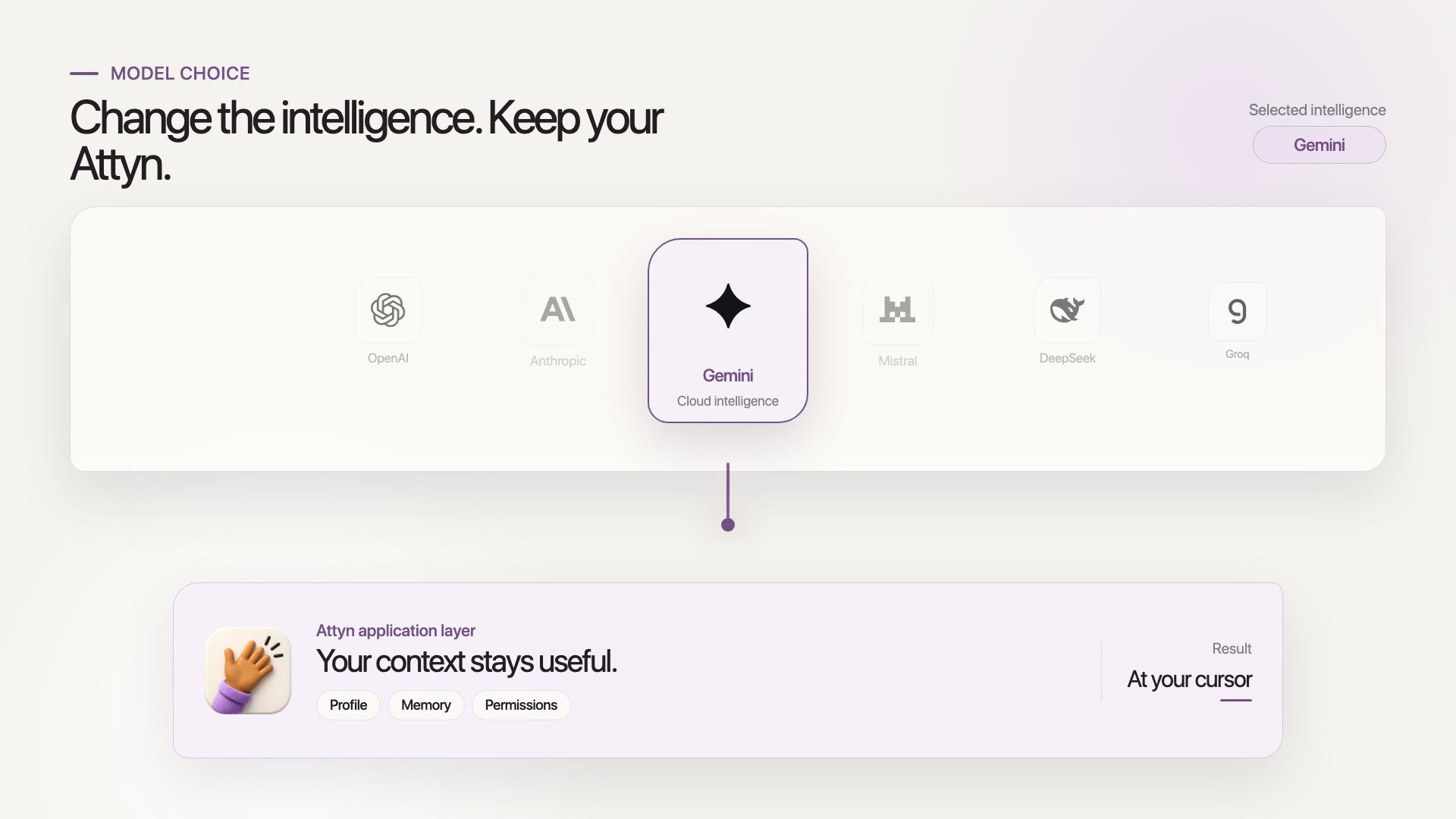
Attyn Credits let you use supported cloud intelligence without configuring your own API key. The amount consumed depends on the selected intelligence and request.
Can I use Attyn without buying credits?
Yes. Use supported local models or bring a supported provider key. Availability and capability depend on the selected option.
Can I buy Attyn after renting it?
Yes. Customers can move from a rental plan to the available ownership offer.
What does lifetime mean?
Continued use of the purchased software tier under its licence terms. It does not include unlimited third-party AI usage or unrelated future products.
Does my data always stay local?
Attyn stores supported profile context and files locally. Direct dictation and supported local models can operate on the computer. When a cloud model or connected service is selected, relevant request context is processed under that provider’s policy.